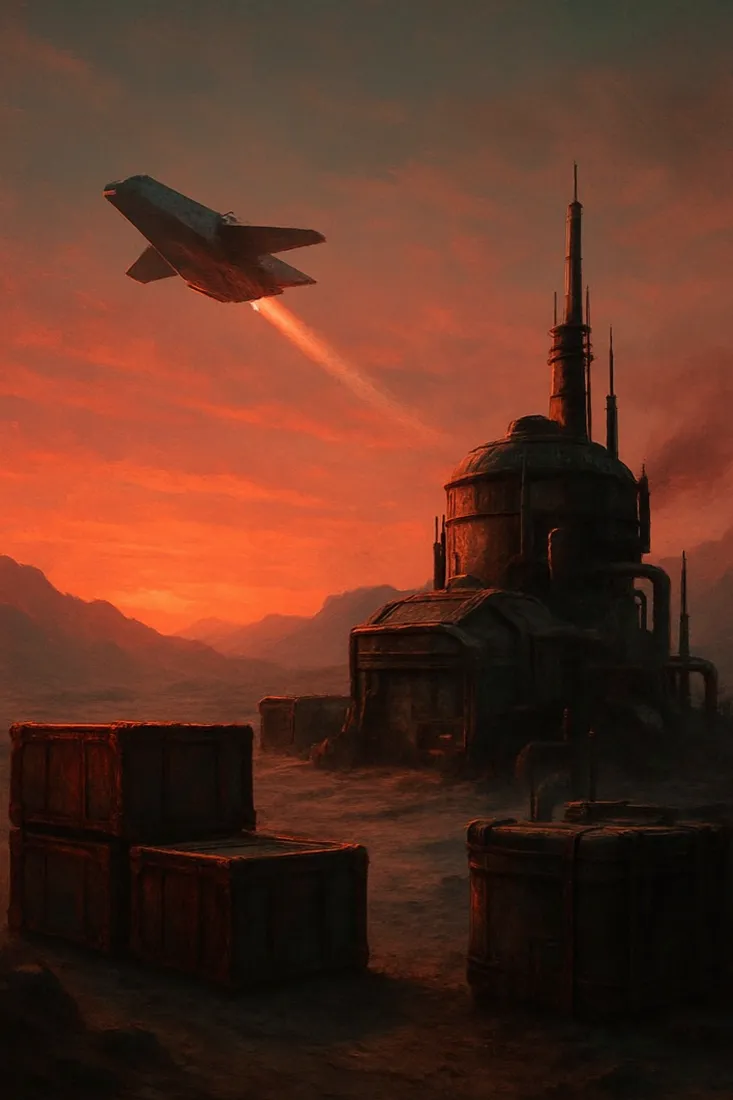
Our first base in Astro Empires sat on a modest rocky planet with poor fertility and a decent amount of solar energy. We learned to care about those words quickly. Every world on the map is described by its terrain, construction area, energy and resources, and choosing where to plant your next base is half the game. The other half is deciding whose base to take.
Astro Empires is run by Cybertopia and plays in the browser with no download. It celebrated twenty years in May 2026, and in September of that year announced a new server named Cosmos. The structure is classic empire building, but spread across a huge, shared map where planets, moons and asteroids all count, and where guilds decide who owns which region.
Astros, and why the rock you choose matters
The game calls every object that orbits a star an astro: planets, moons, asteroids and the rest. Each has a terrain type, a construction area, solar energy, fertility and resources of metal, gas and crystals. These properties decide what a base there can become. A large fertile planet supports a growing population; a small airless moon may still be perfect for one specialised role.
Owning a base on an astro lets you build structures that produce income, energy and population. Most buildings use one unit of area and one of population per level, while urban structures add population instead of using it. Planning a base becomes a careful fitting puzzle, and comparing two candidate worlds side by side is a surprisingly absorbing way to spend a coffee break.
Credits drive the whole engine
Unlike many rivals, Astro Empires runs largely on a single currency, credits. Every structure, ship and technology has a credit cost, and that cost determines how long it takes to build. More income means faster everything, which makes the economy easy to grasp and hard to master. We found ourselves obsessing over income per hour the way OGame players obsess over flight times.
Bases have separate ratings for construction, production and research. Shipyards use production to build ships, and research labs use research to unlock technologies. Raising those ratings in the right base at the right time is where long-term players pull ahead. The game’s own help pages explain the formulas plainly, which we appreciated, because nothing here is hidden behind guesswork.
Fleets, defences and taking someone else’s base
Fleets range from cruisers and heavy cruisers up to the famous capital ships, including the Leviathan, Titan and Deathstar. Outpost ships found new bases on unoccupied astros. Defences automatically protect a base from attackers, helping the ships in orbit, so a well-fortified home is a serious obstacle. Seeing a rival’s detailed fleet usually requires having your own presence nearby.
Conquest is where Astro Empires bares its teeth. Take over an enemy base and you collect a share of its income, while the occupied base suffers reduced construction, research and production. That makes territory genuinely valuable and gives wars a clear economic purpose. Losing a base hurts, but it rarely ends your game, and taking one back with your guild is deeply satisfying.
Guilds, new servers and an AI helper
Guilds are the heart of the game. Members share sight of nearby regions, coordinate attacks and defend each other, and a good guild chat is the fastest tutorial you will find. Wars play out over days, with planned strikes landing in waves. As a solo player we survived; as a guild member we finally understood what the map was for.
Newcomers are best served by fresh servers, where everyone starts small, and the September 2026 arrival of Cosmos is a good moment to join. The site has also added a GPT-powered AI assistant for questions, and an optional paid upgrade account for extra convenience. Playing free, we found the game fair enough, with skill and guild support mattering far more than any upgrade.
Astro Empires: the opening week
- Compare several nearby astros before founding your second base; construction area and energy matter more than looks.
- Prioritise income structures early, since credits decide how quickly every later project finishes.
- Build a research lab and pick technologies that strengthen your economy before chasing big warships.
- Join an active guild in your region; shared sight of the map is worth more than any early ship.
- Fortify your home base with defences before you start provoking neighbours with raids.
What we love
- Astros of every type make base placement a genuinely interesting choice.
- A single credit economy is clear, readable and satisfying to grow.
- Conquest gives guild wars a real economic purpose.
- Fresh servers like Cosmos give newcomers a fair starting line.
What grates
- The interface is text-heavy and can feel dated on first sight.
- Solo players miss much of the strategic picture without a guild.
- Established servers are tough to break into without allies.
The player Astro Empires is built for
Astro Empires is for strategists who love a big shared map and the politics of who owns which region. It suits players who enjoy organising with a guild and reading the fine print of a planet. If you want a tight, clock-driven duel, OGame does that better; if you want territory, this is the place.
The last word on Astro Empires
Astro Empires is a broad, territorial strategy game with a readable economy and wars that mean something. It looks plain and leans heavily on guild play, but twenty years of refinement show in how well its systems fit together. Join on a fresh server, find a good guild, and it will happily absorb a few short visits a day for many months.